





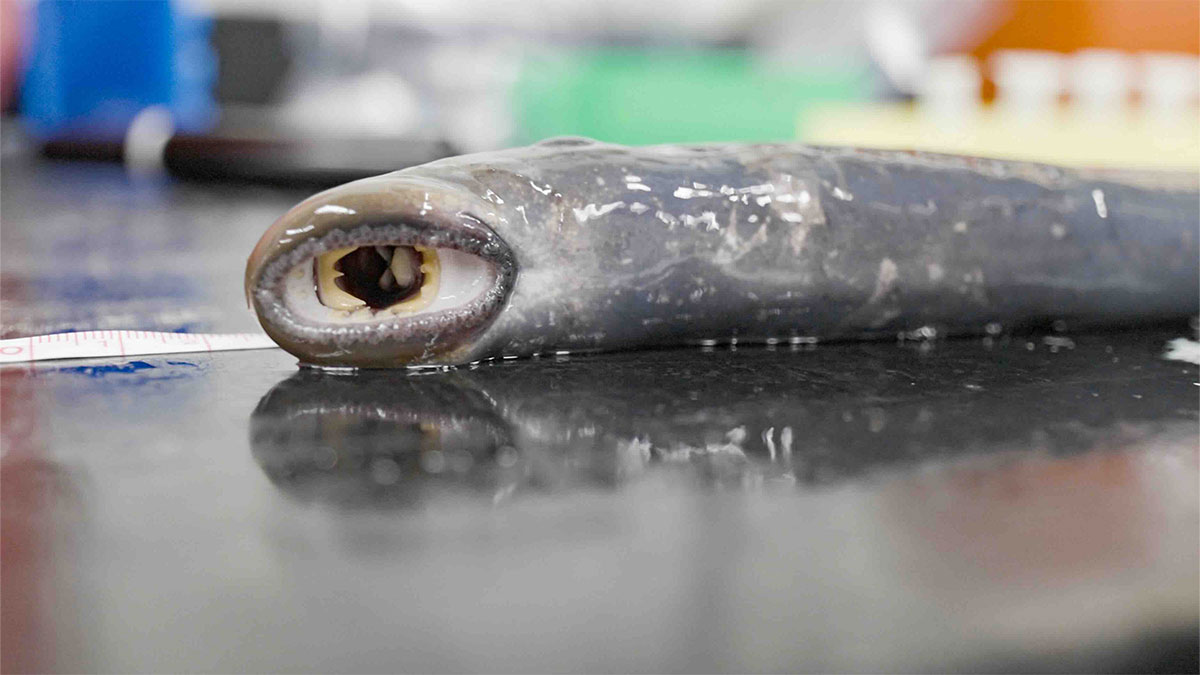
Passing Safely to Spawning Sites
U of I Researchers Assist Pacific Lamprey in the Journey Home

Education’s Role in Idaho’s Criminal Justice
U of I’s Prison Education Initiative Opens New Doors
Space Pioneer Comes Home
Space-X co-founder shares career journey with Coeur d’Alene students.
University of Idaho News
News Releases
U of I Boise Grad Student Earns Exclusive ‘T’ Space Architecture Residency
Posted 4/24/2024 2:00:00 PM
Mason Miles, a fifth-year University of Idaho Boise architecture master’s student, has been admitted to the 2024 ‘T’ Space Architecture Residency. Read more
‘The Anthropocene Reviewed’ Selected as U of I’s 2024-25 Common Read
Posted 4/24/2024 1:45:00 PM
University of Idaho has chosen “The Anthropocene Reviewed,” a collection of personal essays by John Green, as its Common Read for 2024-25. Read more
U of I Celebrates 31 Years of Engineering Innovation at Engineering Design EXPO April 26
Posted 4/23/2024 9:09:00 PM
The public is invited to experience the many ways U of I engineering students are solving real-world problems during the Engineering Design EXPO April 26. Read more
Faculty and Staff
Review U of I Technology Purchasing Procedures
Posted 10/12/2023 11:30:00 PM
OIT reminds employees to review procedures before purchasing hardware or software. Read more
Space Use Survey Starts Tomorrow
Posted 7/6/2023 9:03:00 PM
Representatives will conduct a space use survey on the University of Idaho campus from Tuesday, July 11, until Friday, July 14, 2023. Read more
Driver Record Check Procedure Change
Posted 6/1/2023 8:59:00 PM
U of I updates driver record check procedures effective July 1, 2023. Submit driver record requests via Human Resources. Read more
U of I in the News
UI students dig for history in their backyard
Posted 9/27/2023 4:09:00 PM
Remnants of the past are lying just underneath the feet of Moscow High School students. Thirty-five U of I students are uncovering those remnants. Read more
UI student from Genesee creates wool clothing business
Posted 4/28/2023 3:00:00 PM
A Genesee connection helped set University of Idaho student Kaylee Flodin on a fashionable career path. She got interested in fashion design in 4-H. Read more